
 March 10, 2026
  8 min read


 Back to Blog
Neuroscience & Brain Health
Your Brain Has Secret "Turning Points" at Ages 9, 32, 66, and 83
By Dr. William “Wes” Alden • Based on Nature Communications (Nov 2025) • 12 min read
We like to think of brain development as a smooth curve: rapid growth in childhood, a peak in our 20s or 30s, then slow decline. But a groundbreaking new study in Nature Communications (November 2025) says that’s way too simple. Using cutting-edge brain imaging from over 4,200 people aged 0 to 90, researchers discovered four major “topological turning points” where the brain’s wiring pattern fundamentally shifts direction.
Think of your brain as a massive transportation network. Some cities (brain regions) are super-connected hubs. Roads between them are efficient highways or winding local streets. The study shows this network doesn’t just gradually age—it hits distinct phase changes at specific ages, each with its own rules for how information flows, how specialized areas work, and how resilient the whole system is.
4,200+
people scanned with diffusion MRI, aged 0 to 90 years
4
major topological turning points discovered
What on Earth Is "Brain Topology"?
Before we dive in, let’s demystify the jargon (don’t worry—the researchers used math, but we’ll keep it human).
Integration
How easily information zips across the entire brain (short paths, high global efficiency).
Segregation
How well the brain divides into specialized “neighborhoods” or modules (high clustering, modularity).
Centrality
Which regions act as critical hubs or crossroads.
These properties were measured using graph theory on diffusion MRI scans that track white-matter “highways” (fiber bundles) connecting 90 brain regions. The team then fed these 12 network metrics into UMAP—a clever algorithm that projects high-dimensional data into 3D “manifold” spaces so hidden patterns pop out.
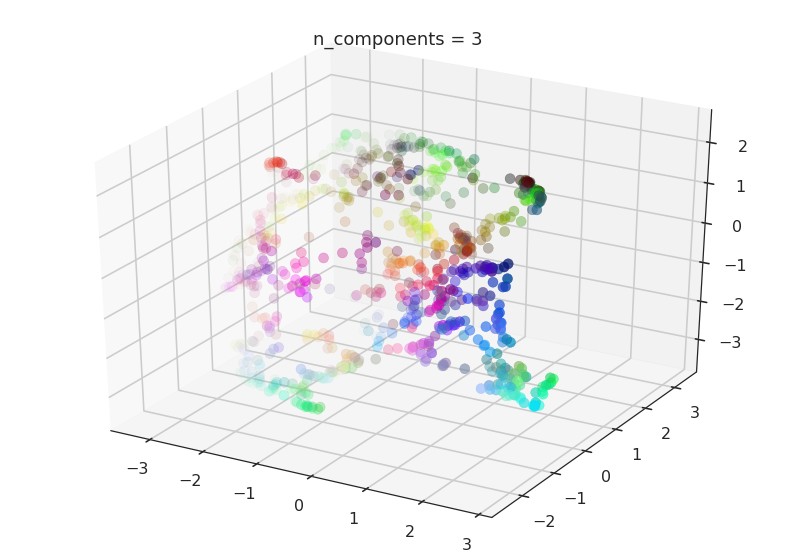
UMAP 3D manifold projection of brain network metrics across the lifespan
By looking at thousands of these 3D trajectories (with different algorithm settings for robustness), they spotted where the overall direction of brain organization changes most dramatically.
The 5 Epochs of Brain Wiring
EPOCH 1
Birth to ~9 years
“Building Local Clusters”
Your baby and young-child brain starts dense and interconnected but relatively inefficient globally. The standout feature? Clustering coefficient—neighboring regions get more tightly wired together. Global efficiency actually dips a bit while local specialization ramps up. This lines up with synaptic pruning (getting rid of weak connections) and sets the stage for the next leap. The turning point at ~9 years was the most consistent across every analysis—right around the typical start of puberty.
EPOCH 2
~9 to ~32 years
“Peak Small-World Efficiency”
This is the golden era of brain optimization. The network becomes a classic small-world setup: highly efficient long-distance highways plus strong local clusters. Global efficiency peaks around age 29–30, modularity drops (less rigid separation), and the whole system is beautifully balanced for fast, flexible thinking. White-matter integrity (the quality of those highways) also hits its lifetime high around here. If you’ve ever felt mentally sharpest in your late 20s/early 30s… science just backed you up.
EPOCH 3
~32 to ~66 years
“Slow Specialization & Maintenance”
After the peak, efficiency gently declines while local efficiency and clustering rise. The brain shifts toward more specialized modules—great for expertise and crystallized intelligence, but slightly less agile for brand-new learning. This long, stable adulthood epoch matches the plateau we see in many cognitive abilities and white-matter metrics.
EPOCH 4
~66 to ~83 years
“Increasing Modularity”
Early aging brings a noticeable jump in modularity. Networks become more segregated—think of it as neighborhoods becoming more self-contained. Integration continues to drop, but the system is still holding together. This turning point (the least dramatic directionally but clear in overall pattern) coincides with accelerated white-matter decline and rising risk of hypertension and early cognitive shifts in many populations.
EPOCH 5
83+ years
“Local Centrality Takes Over”
In the oldest group, the age-topology relationship weakens overall. Only subgraph centrality (how important individual nodes are to their immediate neighbors) keeps increasing significantly. The network simplifies; long-range connections thin out, and local hubs become even more critical. Sample size is smaller here, so results are tentative, but it hints at a genuine late-life reorganization.
Why These Numbers Matter in Real Life
9
YEARS OLD
End of early childhood wiring, start of adolescent remodeling. Also when many neurodevelopmental conditions become more apparent.
32
YEARS OLD
The strongest turning point of the entire lifespan. Matches white-matter peaks, cognitive performance curves, and the end of “emerging adulthood.”
66
YEARS OLD
Onset of accelerated aging changes in high-income countries; dementia and vascular risks climb.
83
YEARS OLD
Late-life resilience phase where the brain leans on remaining strong local connections.
The study beautifully shows that these topological shifts align with biological, cognitive, and even societal milestones. Brain development isn’t one long slope—it’s a series of distinct chapters, each with its own strengths and vulnerabilities.
What Does This Mean for You?
Knowing these turning points could reshape how we think about lifelong brain health:
👶
Parents & Educators
The 0–9 window is about building rich local connections—lots of varied sensory and social experiences matter.
🧠
Young Adults
Your 20s–early 30s really are a neurobiological sweet spot. Push your brain with novelty and learning.
⚡
Mid-Lifers
After 32, focus on maintaining connectivity—exercise, sleep, social engagement, and continuous learning all help slow segregation.
🌿
Older Adults
Post-66, strategies that support modular efficiency (rhythm, routine, targeted cognitive training) might be especially powerful. After 83, nurturing remaining local hubs through stimulation and social connection becomes key.
The Bigger Picture
This is one of the largest, most lifespan-comprehensive studies of structural brain networks ever done. By combining massive data, graph theory, and manifold learning, the team proved that a multivariate, data-driven view reveals patterns invisible to traditional “one-metric-at-a-time” approaches.
Of course, the study is cross-sectional (different people at each age), so we can’t yet track the same individuals over decades. Future longitudinal work and sex-stratified analyses will add nuance. But the core message is loud and clear: your brain is constantly reinventing its organizational strategy—and it does so at predictable, meaningful moments.
What age do you suspect your brain is currently operating in? Drop a comment—I’d love to hear! And if you found this fascinating, share it with the lifelong learners in your life. Science like this reminds us just how remarkable the human brain remains, from day one to 90+.
"Actually, the story is way more interesting than that."
So next time someone says “the brain peaks at 25 and it’s all downhill,” you can smile and reply with confidence.
Neuroplasticity Optimization Protocols
Science-backed strategies to support brain health across every epoch of life.
PROTOCOL 1
NAD+ Optimization
Mitochondrial, Vascular &
Anti-Inflammatory Support
NAD+ levels decline with age, impairing energy production, blood flow, and repair. Boosting NAD+ improves neurovascular coupling, white-matter integrity, reduces neuroinflammation, and supports cognition/memory.
Suggested Protocol:
- NMN or NR: 500–1,000 mg daily
- TMG (betaine): 500–1,000 mg
- Best timing: Epochs 3–5 (post-32)
- Monitoring: Optional blood NAD+
Human trials confirm oral NR/NMN raise cerebral NAD+; animal data show restored blood flow and cognitive benefits.
PROTOCOL 2
B-Vitamin Complex
Myelin Protection &
Homocysteine Control
Elevated homocysteine damages white matter and accelerates atrophy. B6, B9 (folate), and B12 lower it, preserve gray/white matter volume, and support structural connectivity.
Suggested Protocol:
- Methyl-B12: 1,000–5,000 mcg/day
- L-Methylfolate: 400–1,000 mcg/day
- P5P (active B6): 10–50 mg/day
Test first: Check serum B12, folate, and especially homocysteine (aim < 10 μmol/L). Strongest evidence from VITACOG trials.
PROTOCOL 3
Neuroprotective Peptides
BDNF Upregulation, Synaptogenesis & Repair
These short amino-acid chains signal specific brain pathways. Popular in integrative neurology for focus, anxiety, and repair.
Suggested Protocol:
- Semax: Boosts BDNF, focus, memory
- Selank: Anxiolytic, enhances clarity
- Dihexa: Synaptogenesis & memory
- Cerebrolysin: Advanced repair (Epochs 4–5)
Typical use: 4–8 weeks on, 2–4 weeks off. Often stacked (e.g., Semax + Selank nasal daily).
Example Age-Adapted Stacks
(Under Professional Guidance)
0–32
GROWTH & OPTIMIZATION
Lifestyle + NAD+ starter + B-vits + Semax/Selank nasal.
32–66
MAINTENANCE
Add Dihexa cycling + consistent exercise/diet.
66+
RESILIENCE & REPAIR
Emphasize NAD+ + B-vits + peptides for vascular/local support + medical monitoring.
The Bigger Picture — Empowering Lifelong Brain Health
This study proves brain organization unfolds in distinct chapters with predictable shifts. Combining its insights with proactive, holistic protocols—rooted in NAD+ support, B-vitamin optimization, targeted peptides, and unbreakable lifestyle foundations—offers a science-backed roadmap to potentially strengthen integration, balance segregation, and enhance resilience at every turning point.
You can't stop the chapters, but you can write them stronger.
What age do you suspect your brain is currently operating in? Have you tried any of these supportive strategies? Drop a comment—I’d love to hear (and remember to discuss with your doctor first).
Share this with the lifelong learners in your life. Science like this reminds us just how remarkable—and malleable—the human brain remains, from day one to 90+.
Based on “Topological turning points across the human lifespan” by Mousley, Bethlehem, Yeh & Astle, Nature Communications (2025), plus supporting literature on NAD+, B-vitamins, and peptides. All protocols are illustrative and require medical supervision.